What is Railway Transportation and How Does It Work?
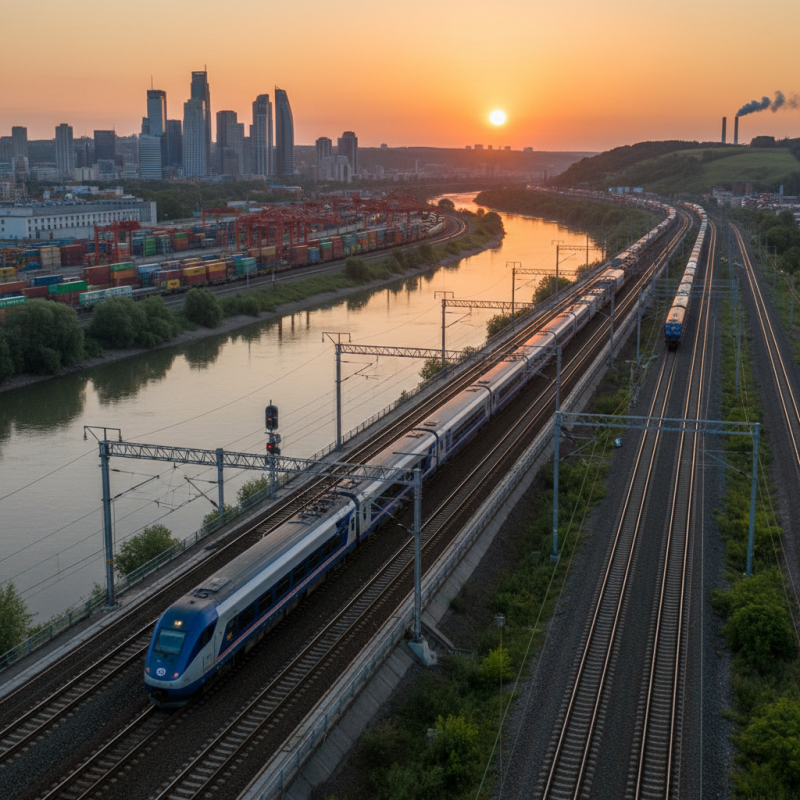
Railway Transportation plays a crucial role in our society. It connects cities, businesses, and individuals. The system relies on a network of tracks and trains. Trains carry passengers and freight over long distances. This mode of transport is efficient and cost-effective.
However, Railway Transportation faces challenges. Delays and maintenance issues can disrupt service. Environmental concerns, such as noise and emissions, are significant too. Despite these problems, many prefer trains for their reliability.
Understanding how Railway Transportation works is essential. It involves mechanics, engineering, and logistics. People often overlook the complexity behind this system. Each detail matters in achieving a smooth operation. Exploring these elements can reveal insights and improvements needed in the future.
Definition of Railway Transportation
Railway transportation is a key method of moving people and goods over long distances. Defined, it involves trains running on tracks, powered by various sources. This mode of transport has evolved significantly since its inception in the early 19th century. Today, railways account for approximately 7% of global freight transport and over 30% of passenger journeys. This efficiency is not without its challenges.
The logistics of railway transportation are complex. Tracks must be well-maintained, and schedules need precise coordination. For instance, over 20% of freight transported by rail is coal, according to industry reports. However, delays and congestion remain significant issues in many regions. Upgrading infrastructure to accommodate modern demands is essential but often underfunded.
Tips: Always consider local rail options when planning travel. These services often provide unique views and experiences. Also, review regional reports on railway efficiency. Your understanding can open discussions on improvements. A critical approach to the existing systems helps identify areas for innovation. Reducing waste in operation is key to future growth in this sector.
What is Railway Transportation and How Does It Work? - Definition of Railway Transportation
| Dimension |
Description |
| Definition |
Railway transportation involves the conveyance of goods and passengers via railways using trains. |
| Components |
Tracks, trains, stations, and signaling systems. |
| Types of Services |
Passenger trains, freight transport, high-speed rail, and suburban transit. |
| Advantages |
Energy efficiency, capacity for large volumes, and lower greenhouse gas emissions. |
| Challenges |
Infrastructure costs, maintenance, and competition with other transport modes. |
| Global Reach |
Railway networks span continents, offering connectivity across urban and rural areas. |
| Technological Advances |
Integration of automation, smart signaling, and electrification for efficiency. |
Components of Railway Systems
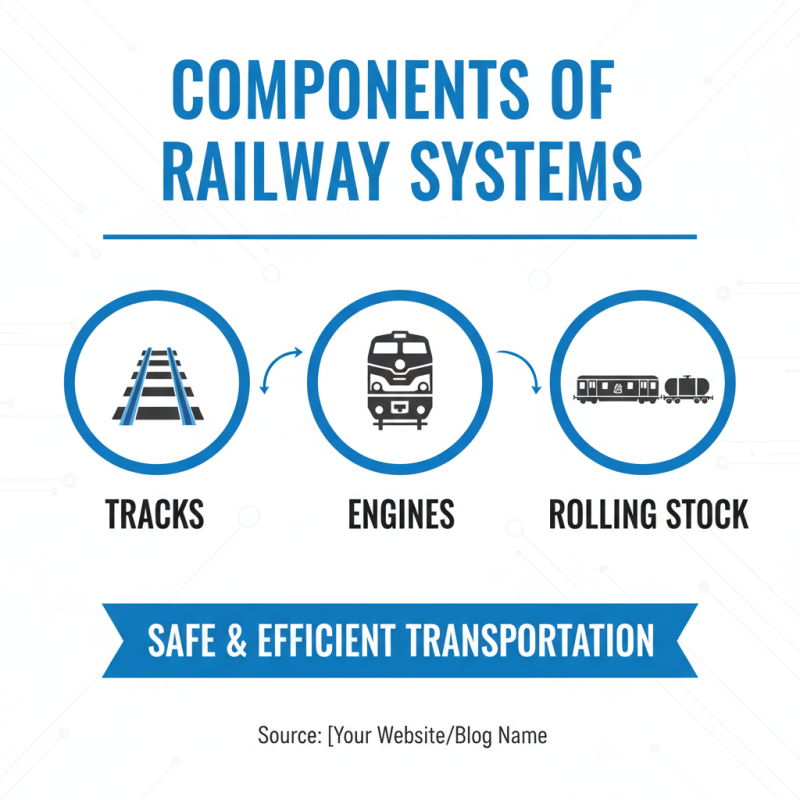
Railway systems consist of several critical components. These elements work together to ensure safe and efficient transportation. Tracks, engines, and rolling stock are just a few of the main parts.
Tracks form the foundation of any railway system. They consist of rails laid on sleepers and support structures. This construction ensures that trains run smoothly. Regular maintenance is essential to prevent accidents. If tracks are damaged, it can lead to delays and dangerous situations.
Engines, often known as locomotives, are another vital component. They power the trains and are designed for efficiency and speed. However, not all engines perform equally. Some struggle with weight or hill inclines. Continuous improvement is necessary to address these issues. Rolling stock includes passenger cars and freight containers. Their design impacts comfort and loading efficiency. A well-planned system enhances the travel experience, but logistics can become complicated. Each component plays a role in the sprawling network of railway transportation.
How Trains are Operated and Controlled
Trains are fascinating machines. They operate on fixed tracks. Control systems ensure safety and efficiency. Engineers design these systems with precision. Trains can be locally operated or automated. The driver must understand the signals and rules. Each stop requires careful coordination.
Communication is critical. Operators use radio systems to stay in contact. They must follow a strict schedule. Yet, delays happen for various reasons. Sometimes, tracks need maintenance, or weather conditions complicate travel. Each train crew must adapt quickly. This can cause stress, yet it builds teamwork.
Safety measures are in place. Warning signals and gates protect crossings. However, human error can lead to mistakes. Training is ongoing for engineers. They must learn to respond to unexpected situations promptly. Every journey teaches something, whether about technology or human resilience. Trains connect cities, but the operation behind them is complex and ever-evolving.
Train Transportation Efficiency by Year
This chart illustrates the operational efficiency of train transportation over the past five years. The data reflects factors such as punctuality, passenger satisfaction, and fuel efficiency.
Types of Railway Transportation Services
Railway transportation offers various services tailored to different needs.
Passenger trains are one key service. They transport travelers between cities, ensuring
comfort and efficiency. Many modern trains include amenities like Wi-Fi
and dining cars. They vary in speed and class, catering to all. Some trains operate at high speeds, making long distances
seem shorter.
Freight services represent another essential aspect. Goods transport
by rail can handle heavy loads. Bulk items like coal and agricultural products are commonly transported this way. Some companies rely on rail to ship large quantities economically.
Yet, logistics can be complex. Coordination is crucial to ensure timely delivery.
Commuter services are prevalent in urban areas. They help people avoid
traffic congestion. These trains often run frequently during peak hours. However, overcrowding
can be an issue. Passengers may find it less pleasant when trains are full. Balancing efficiency and comfort remains a challenge.
Benefits and Challenges of Railway Transportation
Railway transportation offers numerous benefits. It is one of the most efficient ways to move large quantities of goods. Trains can carry heavy loads over long distances. This reduces road congestion and lowers transportation costs. Additionally, railways are generally more environmentally friendly. They emit less greenhouse gas per ton-mile compared to trucks.
However, there are challenges to consider. The railway infrastructure demands high initial investments. Tracks must be maintained and upgraded regularly. Delays can occur due to technical failures or weather conditions. This unpredictability can disrupt schedules. Furthermore, in some areas, railway services are limited. Many cities rely heavily on road transport, neglecting the potential of rail systems.
There are also issues with accessibility. Not everyone lives near a train station. This creates difficulties for certain populations. The development of rail services must consider local needs. Otherwise, it could lead to underutilization. Balancing efficiency and inclusivity is crucial for the future of railway transportation. It raises questions about how to optimize the system. The focus should not only be on technology but also on community engagement.