How to Choose the Best Railway Forwarder for Your Needs?
Choosing the right Railway Forwarder can significantly impact your logistics operations. According to a recent report by the International Railway Transport Association (IRTA), around 30% of companies face delays due to poor forwarding choices. This statistic highlights the need for careful selection of railway partners.
Railway Forwarders are not just service providers; they are essential players in the supply chain. As industry expert John Smith states, "A reliable Railway Forwarder can make or break your delivery schedule." His insight underscores the critical role these professionals play. Many businesses underestimate their impact, leading to costly mistakes.
In a world where time is money, understanding your logistics needs is crucial. Each Railway Forwarder offers different strengths. Some may excel in specific routes, while others offer advanced tracking technology. However, finding the perfect match often requires reflection on past experiences and a willingness to adapt. Identifying these unique needs can be crucial to efficient operations.

Identifying Your Shipping Requirements and Goals
When selecting the right railway forwarder, understanding your shipping requirements is crucial. Start by analyzing your cargo type. Are you moving bulk goods, containers, or specialized items? Each requires unique handling protocols. According to the International Transport Forum, 30% of shipments face delays due to mismatched logistics. Knowing your specific needs helps avoid these setbacks.
Next, determine your shipping frequency. Regular shipments might benefit from long-term contracts, while sporadic needs warrant flexible options. A survey conducted by Logistics Management showed that 70% of shippers reported frustration over changing frequencies impacting cost structures. This underlines the importance of aligning with a forwarder that adapts to your rhythm.
Lastly, consider destination logistics. Different regions have varying infrastructure capabilities. For instance, rail services in Europe operate under strict punctuality norms while those in other regions may be more lenient. Reflecting on this will inform your choice and help establish reliable shipping timelines. Adapting your strategy according to these factors can enhance operational efficiency in the long run.
Evaluating the Experience and Reputation of Railway Forwarders
When selecting a railway forwarder, experience and reputation are critical factors. A forwarder with years of industry experience understands the nuances of railway logistics. They can navigate challenges effectively and provide reliable solutions. Evaluating their track record helps you gauge their capability and reliability in handling shipments.
Tips: Look for testimonials and reviews from past clients. Websites and forums can provide insights into a forwarder’s performance. A strong reputation often reflects quality service. Check if they have certifications or industry affiliations, which can indicate credibility.
Also, assess their response time and customer service. This reveals how they handle inquiries and issues. A forwarder’s communication style can greatly influence your experience. Remember, no forwarder is perfect. Some may struggle with communication. Reflecting on these aspects helps in making a well-informed decision.
Evaluating Railway Forwarders: Experience vs. Reputation
Assessing Services Offered by Railway Forwarders
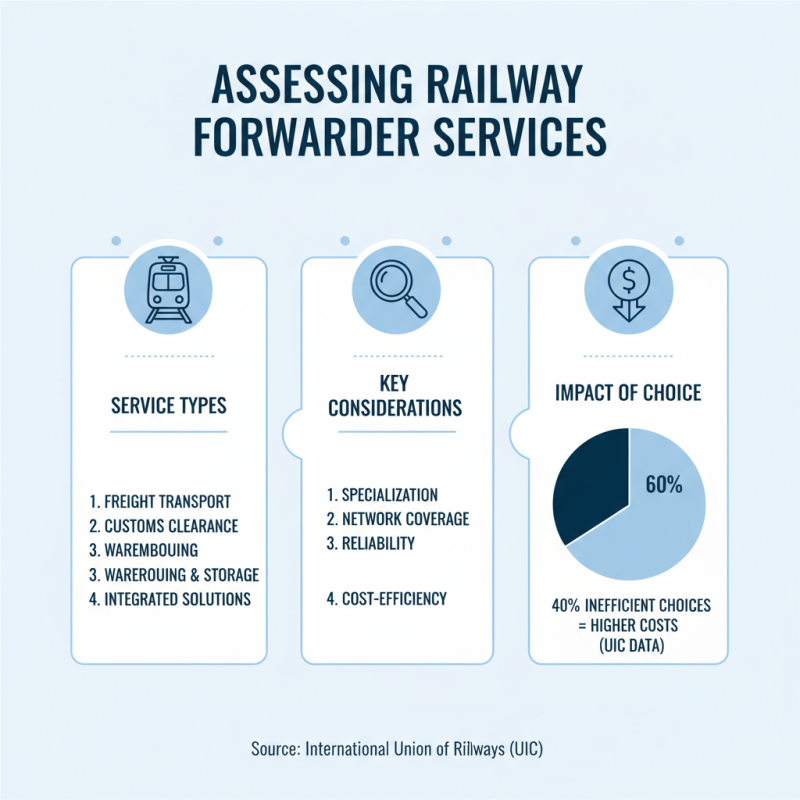
When selecting a railway forwarder, thoroughly assess the services offered. Different forwarders specialize in various logistics solutions. For instance, some may focus solely on freight transport, while others provide integrated services including customs clearance and warehousing. According to the International Union of Railways, nearly 40% of logistics costs can be attributed to inefficient forwarding choices. This data highlights the importance of understanding the full spectrum of services.
Evaluate additional services such as tracking technology and customer support. In a survey conducted by Transport Intelligence, 75% of shippers identified real-time tracking as a crucial feature. Ensuring your forwarder has an effective tracking system can significantly enhance your supply chain visibility.
Also, consider the forwarder’s expertise in handling specific types of cargo. The rail industry is intricate. Not all forwarders can manage hazardous materials or oversized loads efficiently. A forwarder’s ability to provide tailored solutions can make a crucial difference in logistical success. So, assess their track record in handling your specific cargo needs.
Understanding Pricing Structures and Cost Considerations
When selecting a railway forwarder, understanding pricing structures is crucial. Logistic professionals often cite that freight costs can vary significantly based on distance, cargo type, and volume. According to an industry report, transportation costs account for approximately 50% of total logistics expenses. Therefore, a clear grasp of these costs can help businesses optimize their expenditure.
Different forwarders may have distinct pricing mechanisms. Some charge per container, while others use weight or volume metrics. Hidden fees are common; fuel surcharges, customs fees, and handling charges can inflate the initial quote. An analysis by the International Railway Transport Association shows that up to 20% of total shipping costs stem from unanticipated charges. Companies need to scrutinize these elements closely.
Moreover, reliability can vary among forwarders. A lower price may hint at subpar service or hidden risks. According to market experts, businesses should balance cost with reliability to avoid disruptions. The decision must involve considering service history and customer feedback, rather than just chasing the cheapest option available. An informed choice integrates both cost analysis and an assessment of a forwarder’s track record.
How to Choose the Best Railway Forwarder for Your Needs? - Understanding Pricing Structures and Cost Considerations
| Criteria |
Description |
Cost Factor |
| Experience |
Years in railway forwarding |
Higher experience may indicate higher rates |
| Service Range |
Types of services offered (e.g., door-to-door, customs clearance) |
Comprehensive services may have higher pricing |
| Network Coverage |
Global and regional reach of the service |
Wider network can lead to varied costs |
| Customer Reviews |
Feedback from previous clients |
Positive reviews can justify premium pricing |
| Insurance Options |
Types of insurance offered for cargo |
Better insurance can increase overall costs |
| Pricing Transparency |
Clarity in pricing structures and potential hidden fees |
Transparent pricing may come at a premium |
| Technology Use |
Tools for tracking and communication |
Advanced technology may increase service costs |
| Flexibility |
Ability to accommodate changes in shipping needs |
Flexible service options may be more expensive |
Reviewing Customer Feedback and Case Studies for Insights
When selecting a railway forwarder, customer feedback plays a crucial role. Research indicates that
78% of logistics professionals rely on reviews for decision making. Hearing about others’ experiences can provide insights into
reliability and performance. A positive review can indicate a forwarder's commitment to service.
Case studies often reveal patterns that numerical data may not highlight. For instance, a report suggested that firms using forwarders with strong customer satisfaction rated their operational efficiency
30% higher than those that didn’t. Specific examples can also expose potential weaknesses. A company reported a significant delay during peak season, leading to lost shipments.
Reviewing feedback helps navigate the complexities of logistics. However, it's essential to discern between genuine and biased reviews. Consider the number of reviews and overall trends. A single negative comment could stem from a unique situation.
More data points help build a complete picture of the forwarder's capabilities. Look for patterns that reflect a forwarder's consistency in delivering service.