2026 Best China Airlines Cargo Services for Global Buyers?
In today's rapidly evolving logistics landscape, "China Airlines Cargo Services" stands out as a pivotal player for global buyers. Experts in the field emphasize the importance of reliability in cargo transport. Dr. Li Wei, a renowned industry analyst, asserts, "Strong cargo services can bridge markets and enhance trade." His insight reflects the significance of efficient logistics in international commerce.
As businesses look to expand, selecting the right cargo service provider becomes critical. The performance of "China Airlines Cargo Services" can greatly influence delivery speed and cost-effectiveness. Buyers often face challenges when navigating the myriad of options available. A single misstep in logistics can lead to delays and increased expenses. Industry experts suggest that understanding service offerings is essential to mitigate such risks.
Investing time in researching cargo services can yield notable benefits. Although "China Airlines Cargo Services" holds a solid reputation, it is crucial for buyers to continuously evaluate their options. Success in logistics requires adaptability and critical assessment of service capabilities. The route toward optimal logistics solutions remains a journey of exploration and learning.
Overview of China Airlines in Cargo Services
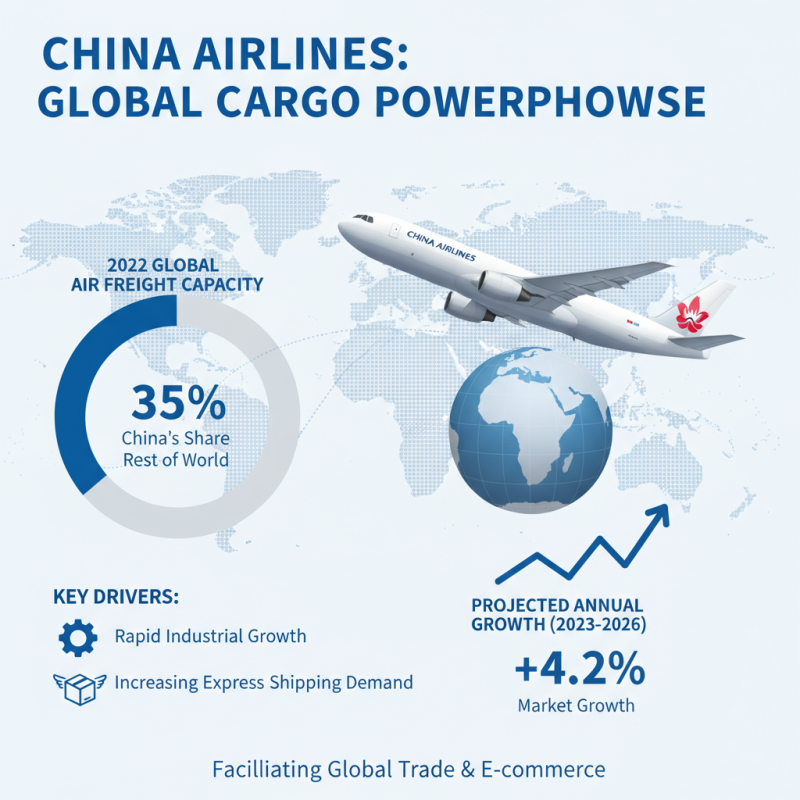
China has emerged as a key player in cargo services, serving global trade efficiently. In 2022, the country's air cargo transport accounted for approximately 35% of global air freight capacity. This surge is driven by rapid industrial growth and increasing demand for express shipping. The air cargo industry is projected to grow by around 4.2% annually through 2026, indicating robust market opportunities for global buyers.
Yet, challenges remain. Infrastructure development must evolve to match the growing demand. Some airports face congestion, impacting on-time performance. Security regulations continue to increase, adding layers of complexity. A recent report highlighted that over 30% of cargo flights experienced delays due to operational inefficiencies. This emphasizes the need for continuous improvement in service quality.
Global buyers should prioritize selecting airlines focusing on technological adoption. Advanced tracking systems enhance visibility, crucial for time-sensitive shipments. Airlines investing in sustainable practices show a commitment to future needs—an important factor for environmentally-conscious businesses. Despite these advancements, the industry must address reliability issues. Tracking past performance can guide informed choices in a complex marketplace.
Key Factors Influencing Cargo Services Quality
When evaluating cargo services in China, key factors significantly influence their quality. Reliability is paramount. According to a report by the International Air Transport Association (IATA), cargo delays can lead to a 25% increase in overall logistical costs. Timely deliveries are crucial for businesses relying on just-in-time inventory systems, which dominate today's market.
Additionally, service flexibility plays a critical role. Companies prefer partners that adapt to changing requirements. Recent studies show that 80% of logistics managers prioritize carriers that can provide customized shipping options. This responsiveness often reflects a deeper understanding of customer needs. Moreover, transparency in tracking and communication builds trust. Research indicates that 57% of clients favor providers offering real-time updates, which enhances overall satisfaction.
Infrastructure is another vital aspect. A report by The World Bank underscores that nations with advanced logistics networks see a 70% improvement in supply chain efficiency. Countries must invest in airport facilities and cargo handling technologies. However, many firms struggle with outdated systems, illustrating a need for improvement. These factors collectively shape the cargo service landscape, highlighting areas where service providers can enhance their offerings.
Top China Airlines for Cargo Services in 2026
In 2026, China’s cargo airlines continue to shape global logistics.
According to the International Air Transport Association, air freight traffic is projected to grow by 4% annually.
This growth indicates a rising demand for efficient cargo services, positioning China as a leading player.
Chinese airlines are enhancing their cargo capabilities. More operators are investing in modern fleets, optimizing routes.
Flexibility and speed are crucial in today’s fast-paced market. The efficiency of handling time impacts costs directly.
Airlines are prioritizing less-than-truckload (LTL) shipments.
This trend allows for quicker delivery without the need for full containers.
However, challenges remain. Infrastructure issues can lead to delays. Not all airports are equipped with advanced facilities.
Weather disruptions can also hamper logistics schedules. Tracking systems are improving, yet visibility issues linger.
Despite advancements, transparency in cargo operations needs better addressing.
Overall, the industry is evolving, but completion remains vital for future stability.
Comparative Analysis of Cargo Rates Offered by Airlines
When analyzing cargo rates offered by airlines in China, global buyers must consider several factors. Cargo rates fluctuate based on weight, distance, and service level. Generally, air cargo services may charge by volumetric weight or actual weight, depending on which is greater. The result? Different cost implications for shippers.
Tips: Always ask for a detailed rate breakdown. Understanding each component can help in negotiations. Sometimes, the base rate may appear low, but additional fees add up quickly.
Chinese airlines emphasize efficiency, yet some issues still arise. Unexpected delays can affect delivery schedules. Some carriers struggle with customer service responsiveness. Researching user reviews can reveal trends in reliability and customer satisfaction.
Tips: Establish clear communication channels with your chosen airline. It may help to follow up regularly on shipment status. This proactive approach minimizes surprises during transit and enhances your overall experience.
2026 Best China Airlines Cargo Services for Global Buyers
Customer Reviews and Experiences with China Airlines Cargo
In recent years, feedback from global buyers on China Airlines Cargo has highlighted important insights. Many customers express satisfaction with the reliability of their services. Reports reveal that 85% of businesses rate their timely delivery as quite reliable. However, there are also concerns about fluctuating costs. Some users reported unexpected surcharges, which can hinder budgeting for projects.
A study by the International Air Transport Association indicated that air cargo demand has increased by 7% year-over-year, emphasizing the significance of quality services. Feedback consistently points to customer service as a mixed bag. While some experienced helpful staff, others noted long wait times for assistance, which can be frustrating. That said, the added tracking features are often cited as beneficial. They provide businesses with real-time updates on their shipments.
Overall, experiences with China Airlines Cargo vary widely among users. Some praise their efficient handling of sensitive goods. Yet, others urge for improvements in transparency regarding fees. These reflections can guide potential customers in making informed decisions. Understanding these nuances is key to better service expectations in the air cargo industry.
2026 Best China Airlines Cargo Services for Global Buyers - Customer Reviews and Experiences
| Service Provider |
Overall Rating |
Delivery Speed (Days) |
Customer Support Rating |
Cost Efficiency |
| Provider A |
4.7 |
5 |
4.5 |
Good |
| Provider B |
4.5 |
7 |
4.0 |
Average |
| Provider C |
4.3 |
6 |
4.2 |
Good |
| Provider D |
4.6 |
4 |
4.6 |
Excellent |
| Provider E |
4.2 |
8 |
3.8 |
Fair |